
Here is a list of all our projects and their short descriptions:
Improved measurement of small capacitances:

Short description:
- In the research paper, we learn how a capacitive sensor works and different ways of measuring small capacitances. We took the patented method of measuring small capacitances as a basis and tried to improve it. In the paper, we investigate the field of capacitive sensors and the method of their capacitance measurements. We have an idea of how to increase the sensitivity of small capacitance measurements, but we need to research how to do it and what components to use. In the paper, we present different forms of fields for sensing capacitance and which ones are better according to our findings. Based on these findings, we create a sensor that would detect water through plastic materials thicker than 8mm.
Smart furniture light:
Short description:
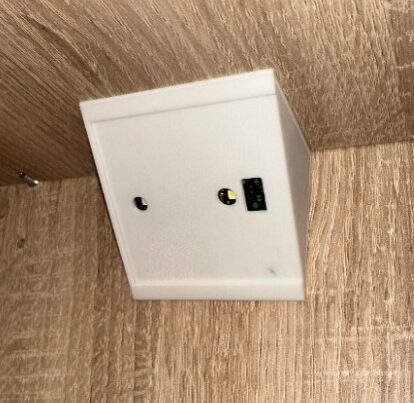
- We will try to make a smart LED light for furniture, so in this research task we will encounter LEDs and IR sensors and a microcontroller. In the research task we will encounter different white LEDs that have different luminosity at the same current. We will choose the most suitable white LED for us. We will also encounter the choice of a microcontroller that will use LEDs and at the same time serve as a control for the IR sensor. We will use the IR sensor as an open door or hand movement sensor. With the help of a microcontroller, we will control the IR sensor and our white LEDs. Our hypothesis is to make a furniture light that is both smart because it is supported for microcontrollers and also economical because it uses a low-power microcontroller and a low-power program. We think that such a light with a longer lifespan would be interesting for the market and also more affordable.
Electronic controller for a smart home:
Short description:
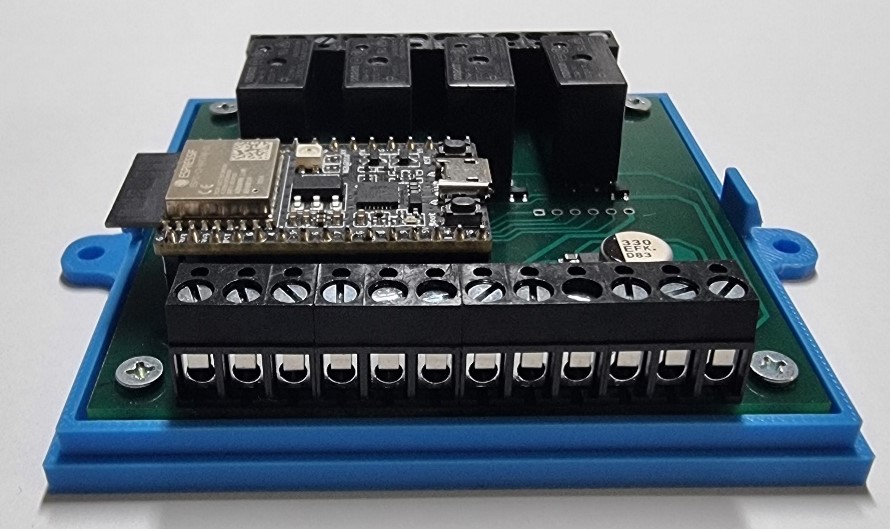
- In the research paper, we will learn about Wi-Fi microcontrollers and control with them. In the research paper, I will investigate how to use a Wi-Fi microcontroller as an interface for controlling a smart home. The purpose of the research paper is to create a microcontroller with a Wi-Fi interface, which is controlled via a mobile phone or tablet. Using a mobile device, we will be able to control various devices such as lights, fans, etc. We will investigate the possibility of installing such a controller, and at the same time investigate whether there is a Wi-Fi interface that would work as a server. We will put everything together in a nice plastic case.
Animation wheel:
Short description:
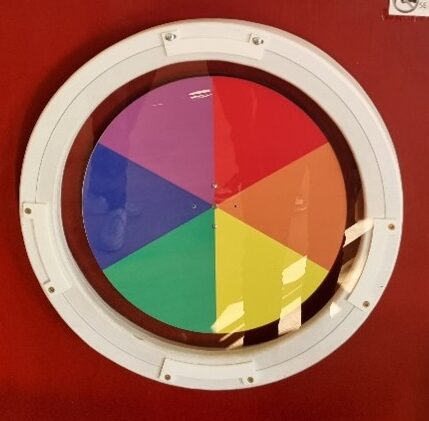
- In this research paper, we are investigating a very old device for which in Slovenian we find the term phenakistoscope. In English, this device is called a “Phenakistoscope”, which is a very simple device because it only contains a rotating wheel that is divided into several parts. In each part, a picture is drawn, these pictures follow one after the other and each is slightly changed. For example, pictures are drawn one after the other of how a character walks. If we spin this wheel, we get the feeling that the figure is really moving. In the paper, we present how to update the “Phenakistoscope” and make such a modern device for children, for smaller ones as an interesting thing, and for slightly older ones to explain how our eyes work. We will graphically process our rotating wheel, install it on an axis that will be driven by an electric motor, which is controlled by electronics with several functions.
Steam sensor:
Short description:
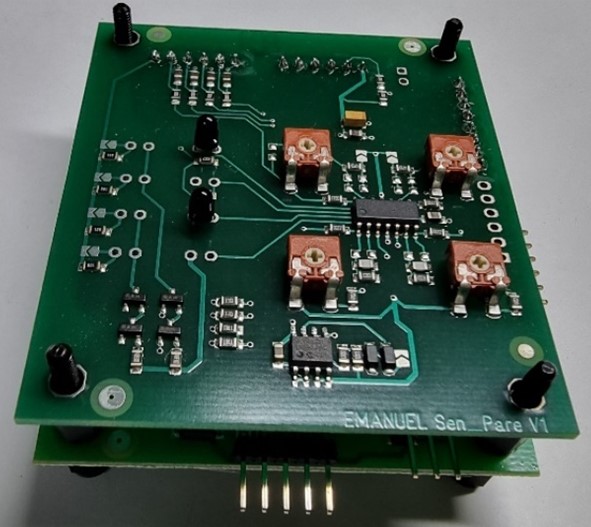
- In the research project, we set out to research and then make a steam sensor. This will not be a humidity sensor, as one might quickly think. We would like to make a steam sensor for water, oil or similar liquids. On the way to the stated goal, we investigated how steam behaves at room temperature and when it evaporates, and how to detect when there is more or less of this steam. At first, we researched and made a steam sensor that has only two states, namely whether there is steam or not. Then we tackled even more difficult matters, namely detecting how much steam there is, namely whether it is very high or low. In the project, we demonstrated the development and manufacture of a steam sensor that provides a voltage, for example, from 0V to 10V or from 4mA to 20mA, or a digital output via the CAN serial bus, for example, from 0% to 100%. Of course, a steam sensor is an electronic circuit, the main part of which is a microcontroller, and the sensors connected to it.
Automatic hood using a steam sensor:
Short description:
- In the innovation proposal, we focus on the problem of kitchen hoods, which have several levels of suction fan power, but unfortunately without any sensors. Our innovation proposal is to make a kitchen hood or convert an existing one to automatic operation. Automatic operation is understood to mean detecting steam using a steam sensor, and regulating the fan using a microcontroller. The regulation would work automatically, or based on the user’s set parameters. We want to solve the problem of steam when cooking, because we often forget to turn on the hood or it is at too low a speed. If we remove the lid, the steam spreads throughout the kitchen, if we have not previously turned on a higher suction power. Also, when we cook, both hands are busy and we cannot immediately turn on the hood at a higher power. In this innovation proposal, we will solve this problem.
Piezo element as a sensor :

Short description:
- In this research assignment, we will learn about the piezo element. We will follow the following research procedure, first we will investigate what a piezo element is, why it is used and how it works. Then we will try to make a speaker with it and then a sensor. Our hypothesis is that the sensor can be made, but it will be quite challenging. First, we will start by learning about piezo elements, then we will try to make a sensor with them that will be competitive with those already on the market, and finally we will try to make a sensor panel using the piezo sensors that we will make.
Smart LED lights with touch display:
Short description:
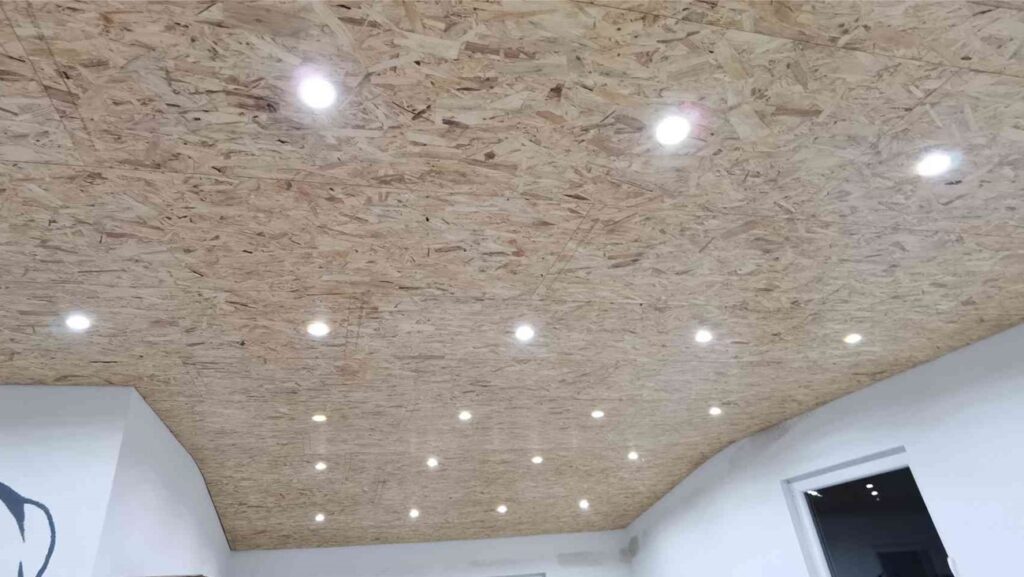
- As a task, we set ourselves the task of making 42 controlled LED lights that are mounted in the ceiling and are adjustable via an LCD touch display that we made ourselves. Each LED light has its own address and can be individually turned on and off and the power can be adjusted. The basic idea was simple, namely to make plastic built-in housings for smart LED lights, electronics for them and an LCD touch display that will control the LED lights. The first problem arose when making the housing for the electronics, where we discovered a new area and a new challenge for us, namely making a mold and making housings from potting resins. The second problem arose when communicating with the LED lights via USART communication, as we had to lower the communication speed very low due to the use of a regular cable. In the task, we learned about making molds and making housings from potting resins (polymer mass), the process of industrial manufacturing of printed circuits and electronics with microcontrollers, and programming microcontrollers. The practical product was a great success with a lot of effort and we came to a lot of new insights. This is valuable knowledge that will be useful for future projects. Smart LED lights are an innovative proposition because compared to other products on the market, we are very competitive in price and easy to manufacture.
Thermoforming of plastics:
Short description:
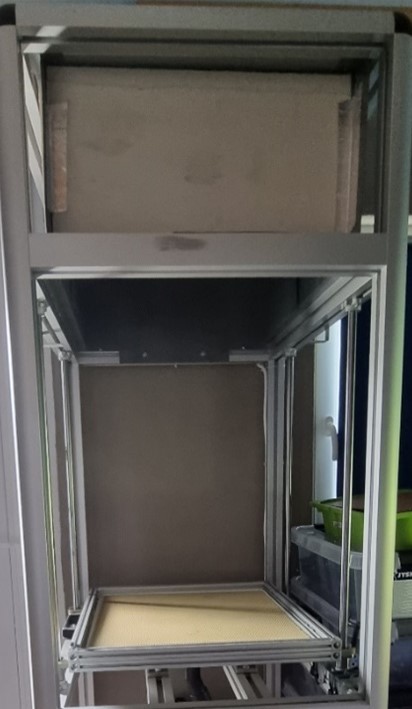
In this research paper, we would like to explore the field of plastic transformation using temperature treatment. First, we will explore what plastic thermoforming is and how it works, then we will look at existing machines on the market that are used for these purposes. Finally, we will try to make our own plastic thermoforming machine, which is also called a plastic vacuum forming machine, as it works using a strong vacuum.